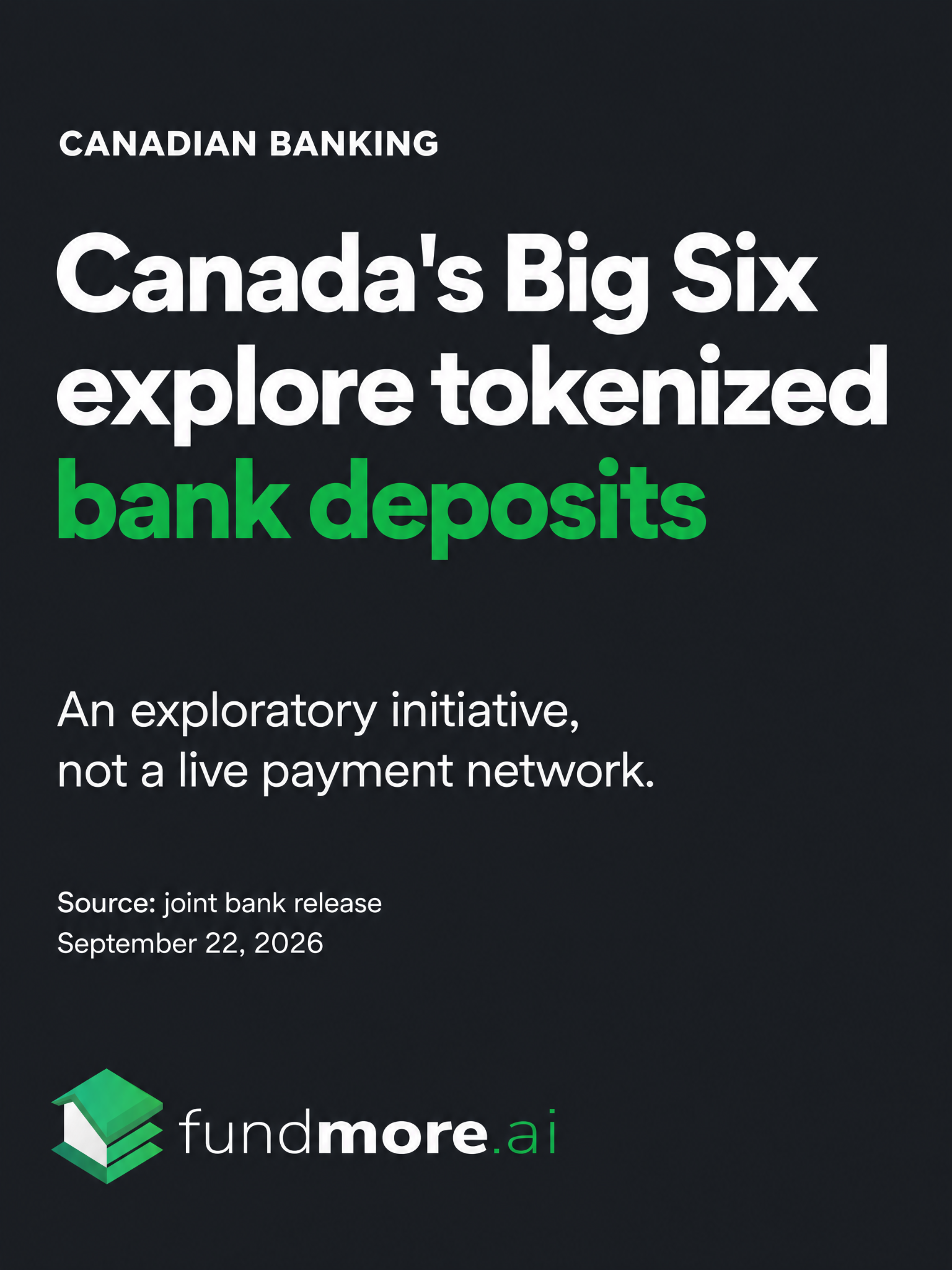
Six banks exploring a common approach to digital money deserve attention. It does not justify pretending the future has already shipped.

Most Canadian bank leadership teams block a war room around federal budget day and the January economic outlook. Almost none block one around an OSFI Quarterly Release Day. That is starting to look like a mistake. On September 10, OSFI moved simultaneously on capital, crypto, interest rate risk, model governance, AI-driven cyber, and the data platform that will carry every future ask. It is a policy stack, not a policy drop, and the connective tissue matters more than any single guideline.
The decision
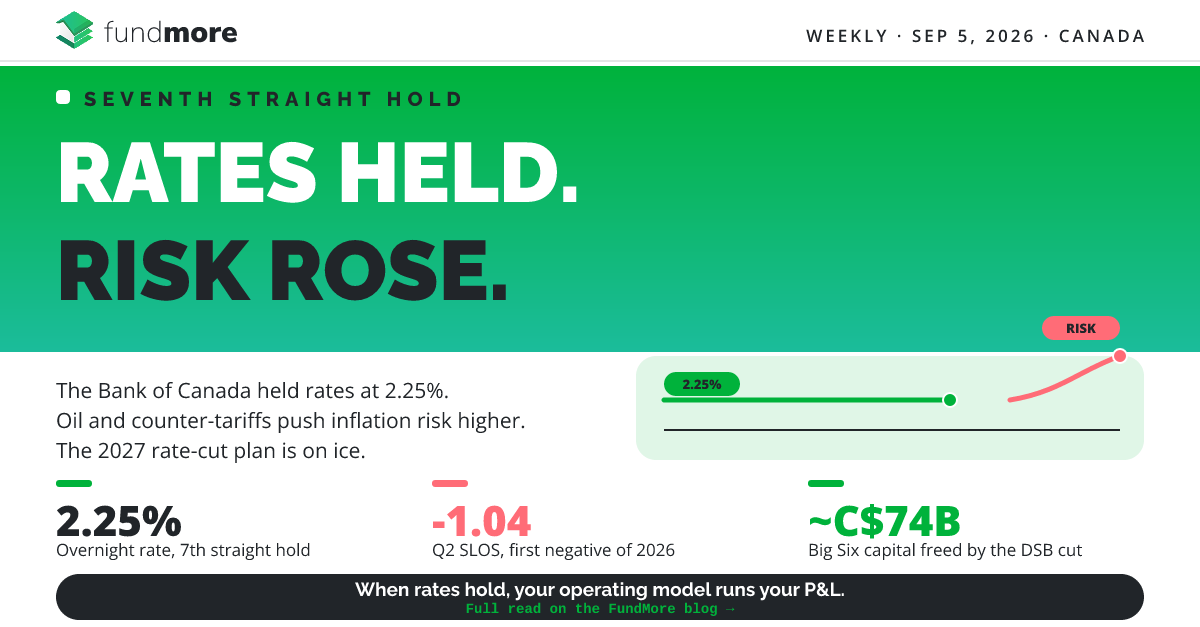
On September 3, 2026, the Bank of Canada held its target for the overnight rate at 2.25%, with the Bank Rate at 2.5% and the deposit rate at 2.20%. It was the seventh consecutive hold, extending a pause that started when the Bank cut to 2.25% in October 2025. Governor Tiff Macklem confirmed the July Monetary Policy Report call for a "broadening recovery" in the economy - but framed inflation as the risk moving fastest. "Oil prices are back up," Macklem told reporters in Ottawa. On tariffs, he was blunter: "The counter-tariffs, and indeed the US tariffs will add costs for some businesses. These tariffs are very steep, but they are applied to a relatively narrow base." The war in the Middle East, he added, is the "bigger issue" for inflation.
The setup
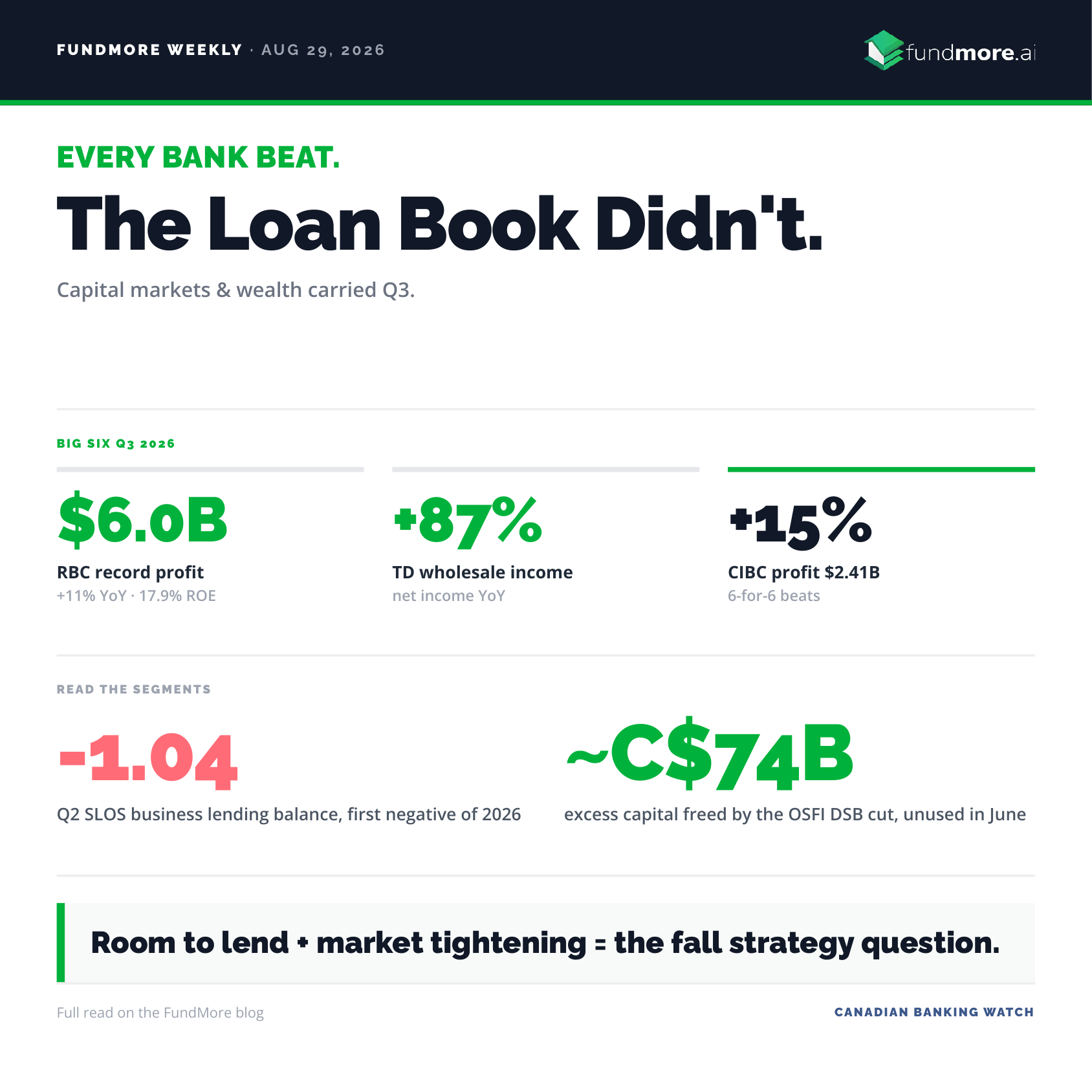
The Big Six reported Q3 2026 results between August 25 and 27. All six beat. The numbers are eye-catching: record profits at RBC and TD, RBC's ROE at 17.9%, TD's wholesale banking net income up 87%, CIBC up 15%, Scotia up 17%, National up 23%. BMO's adjusted numbers cleared expectations despite a charge tied to the sale of its transportation and vendor finance business. Canadian bank stocks are now the most expensive on a forward-earnings basis since 2010.
A well-funded US challenger picked Canada. That is a signal worth reading.
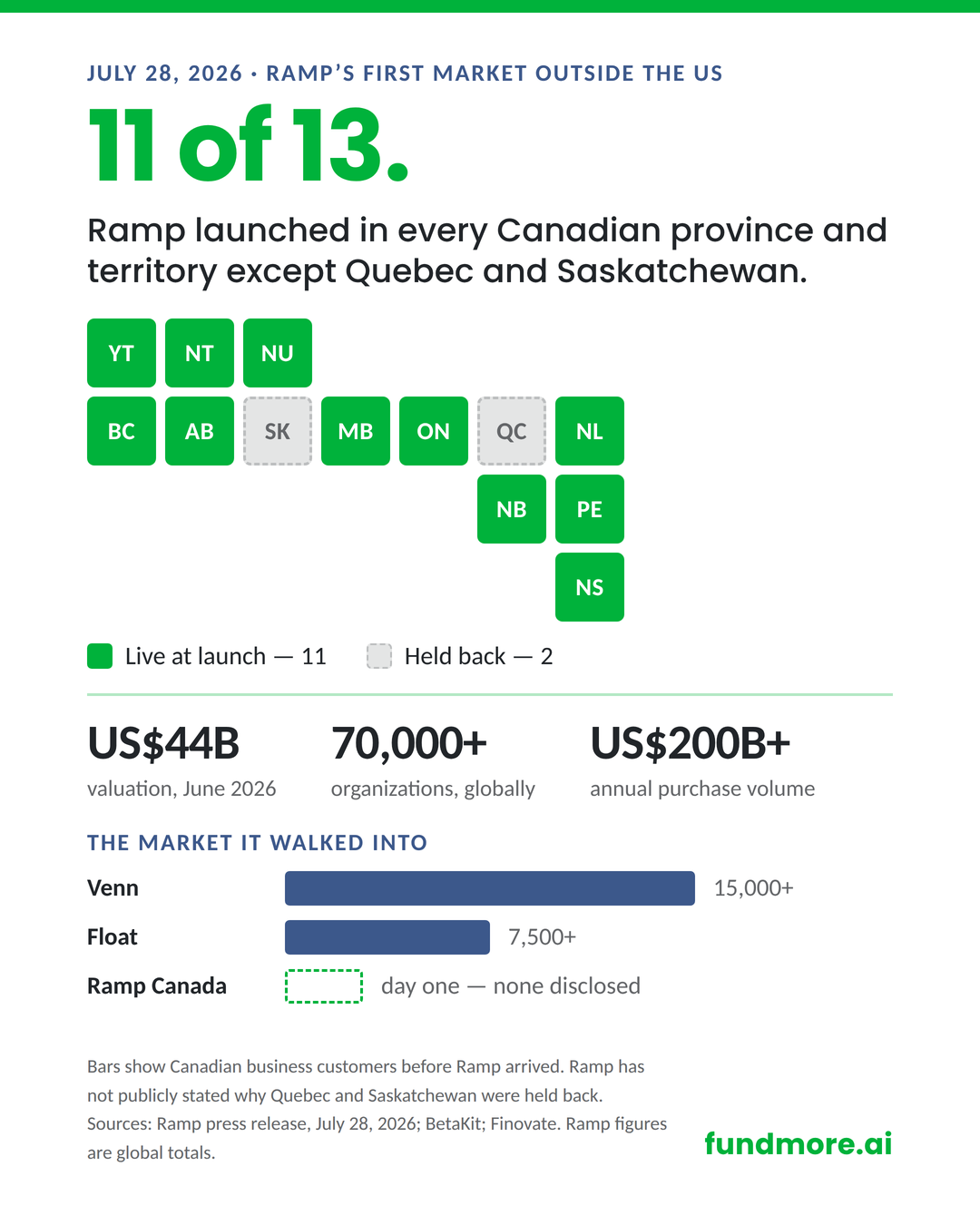
On July 28, Ramp officially launched in Canada and opened its first international office in downtown Toronto. It is a genuinely large moment. Ramp was last valued at US$44B after its US$750M raise in June, serves more than 70,000 organizations globally and processes over US$200B in annualized purchase volume. Canada is now the second country on that map.