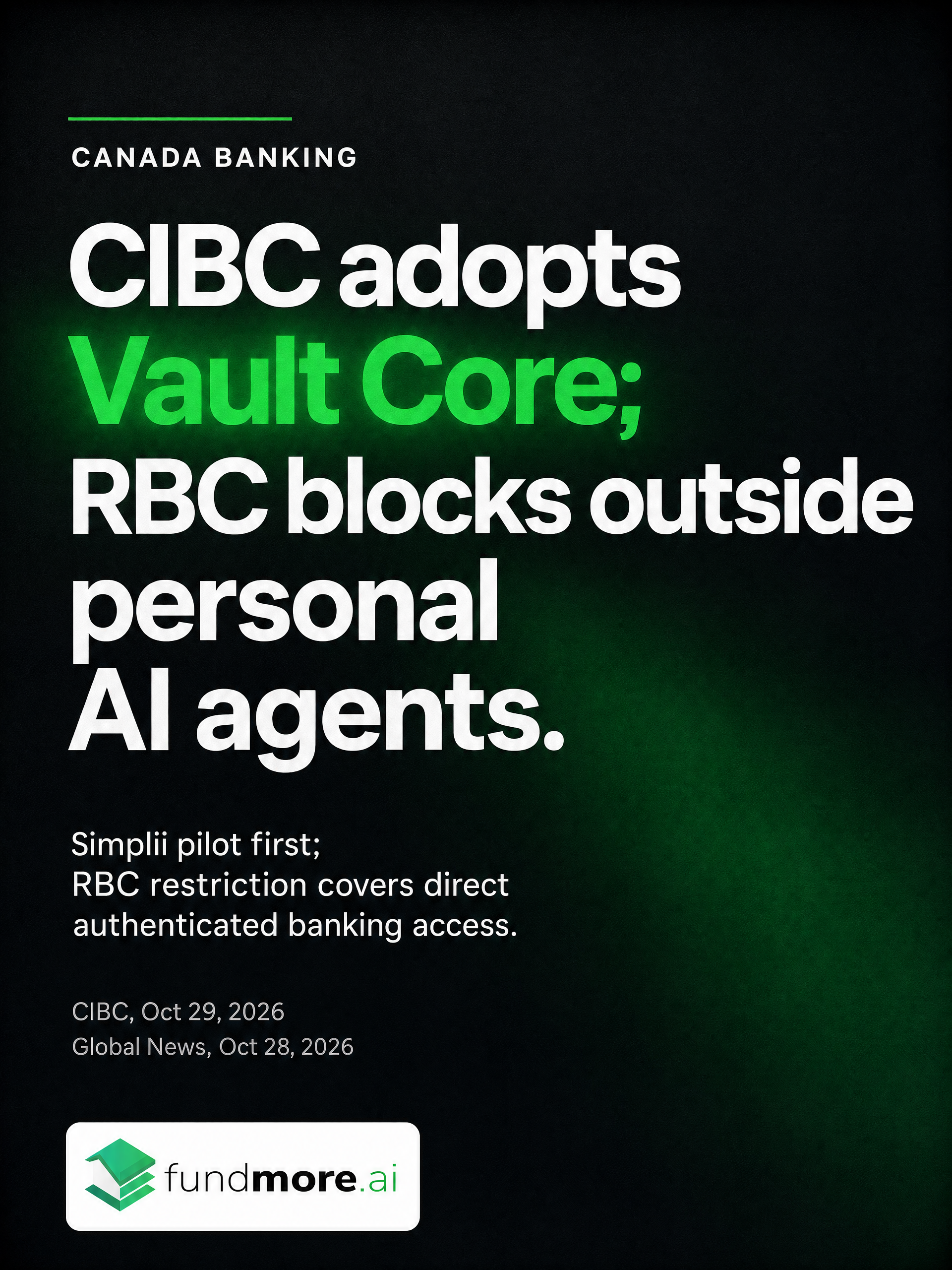
Two banks. Two decisions. One useful lesson for lending executives: modernizing the machinery does not mean handing everyone the controls.
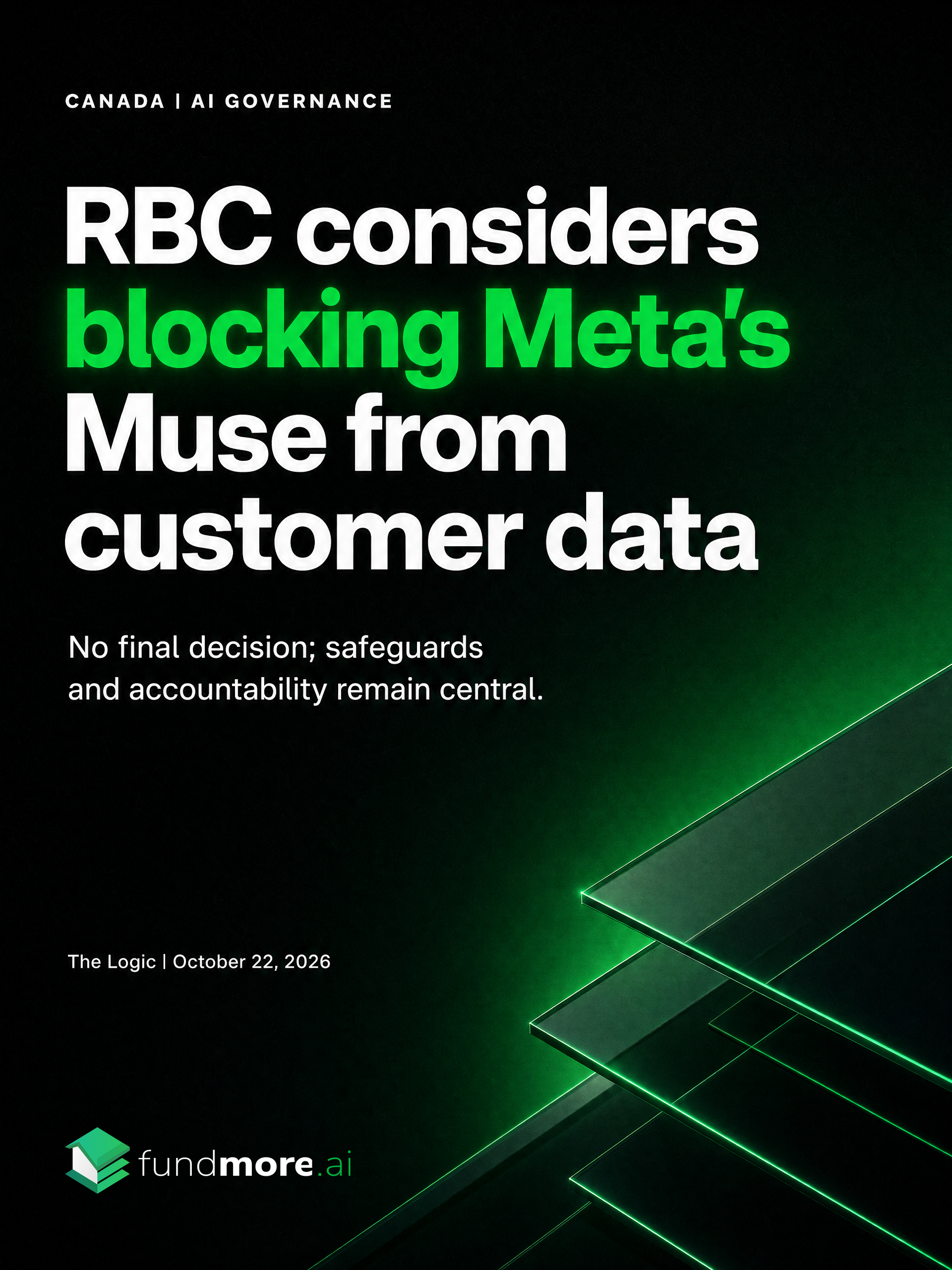
A borrower’s AI assistant can sound confident. Your institution still needs to know whether it has permission.

The survey nobody's boardroom is going to enjoy reading
On August 3, PwC published its 2026 Financial Services Workforce AI Survey, based on responses from 1,004 director-level-and-above leaders at US financial services firms with $500 million or more in revenue. Respondents were split evenly across banking and capital markets, insurance, asset and wealth management, and private equity.
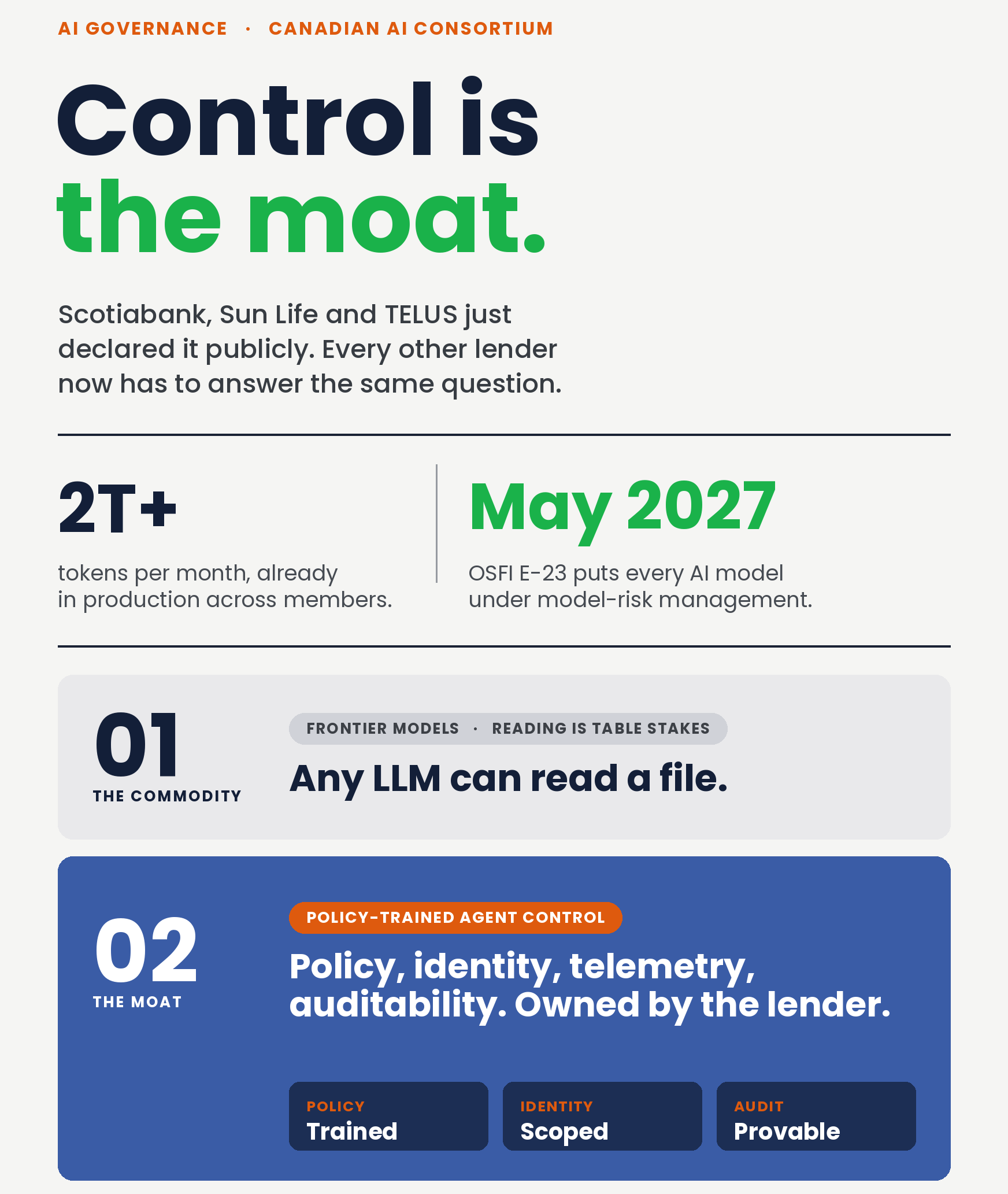
The moat moved. Most lenders have not noticed yet.
On July 7, Scotiabank, Sun Life and TELUS teamed up with Lightworks to launch the AI Consortium, a shared initiative to build and permanently own the enterprise AI control infrastructure that Canadian regulated institutions actually need. The flagship program is called the Agentic Control Plane; it is already running in production, processing more than 2 trillion tokens per month, and delivering regulatory-grade auditability across every model, agent, user and inference pipeline in scope.
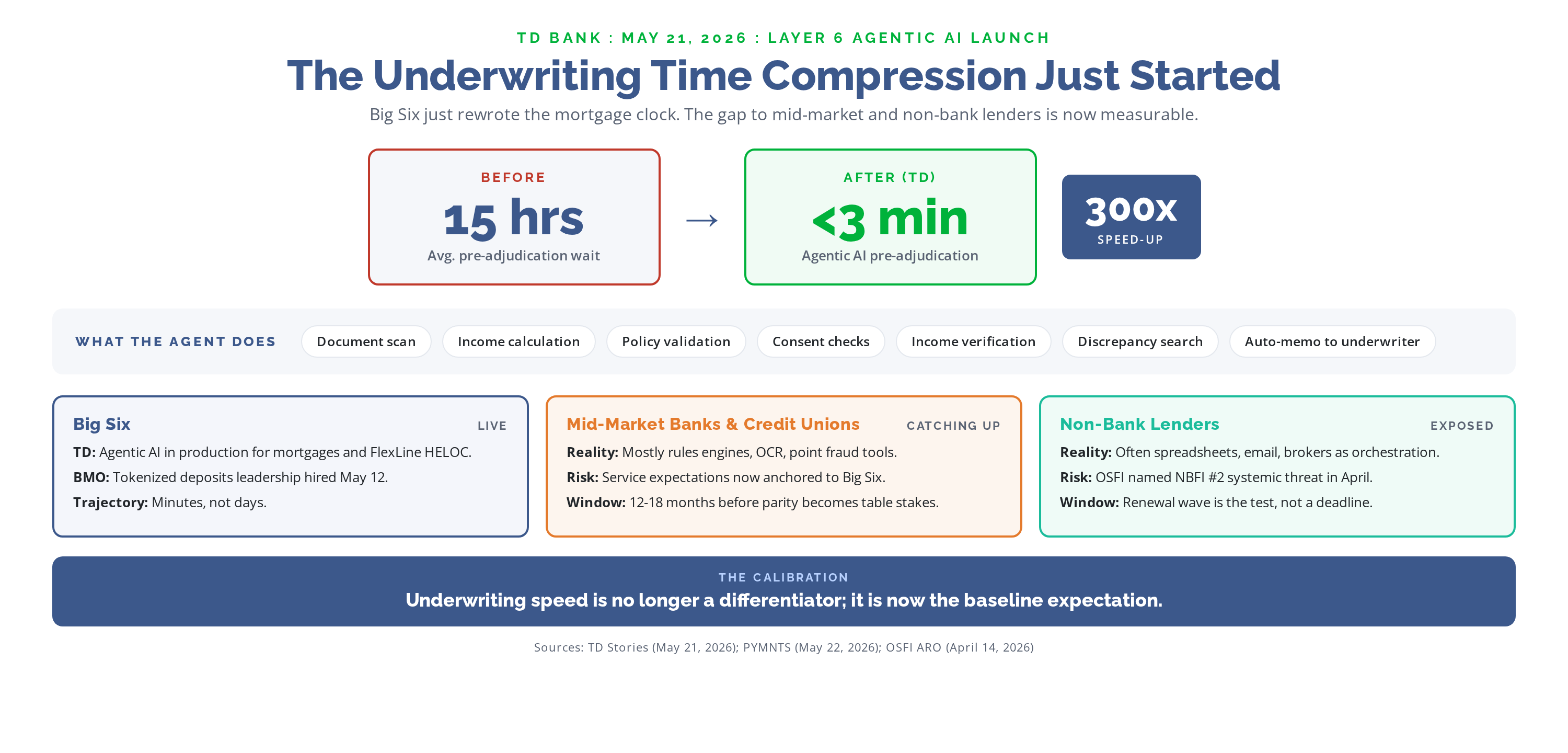
On May 21, 2026, TD publicly detailed its first agentic AI application, built inside Layer 6 and running today across TD mortgage and TD Home Equity FlexLine applications. The model handles document scanning, income calculation, policy validation, consent checks, income verification, discrepancy search, and underwriter memo generation. PYMNTS measured the impact: the pre-adjudication queue, which used to average 15 hours before a human underwriter opened the file, now averages under 3 minutes. That is a 300x compression of one of the most reliably slow steps in Canadian mortgage origination.