.png)
A stablecoin strategy needs more than a token and a launch date. It needs an answer to the awkward questions about reserves, capital, permissions, and who is accountable when something goes wrong.
The transfer app is moving into the daily routine
The most useful question about Wise's Canadian chequing launch is not whether another account is needed. It is the institution that becomes the customer's default.

Most Canadian bank leadership teams block a war room around federal budget day and the January economic outlook. Almost none block one around an OSFI Quarterly Release Day. That is starting to look like a mistake. On September 10, OSFI moved simultaneously on capital, crypto, interest rate risk, model governance, AI-driven cyber, and the data platform that will carry every future ask. It is a policy stack, not a policy drop, and the connective tissue matters more than any single guideline.
The date the batch era ends on paper
On Monday, August 24, 2026, Canadian Payments Association By-law No. 10 and the RTR Rules come into force. It is one of those regulatory events that will feel administrative on the day and structural in retrospect. The by-law is the foundational legal framework for Canada's Real-Time Rail, the new 24/7/365 exchange, clearing and settlement system that supports instant, irrevocable, data-rich account-to-account payments.
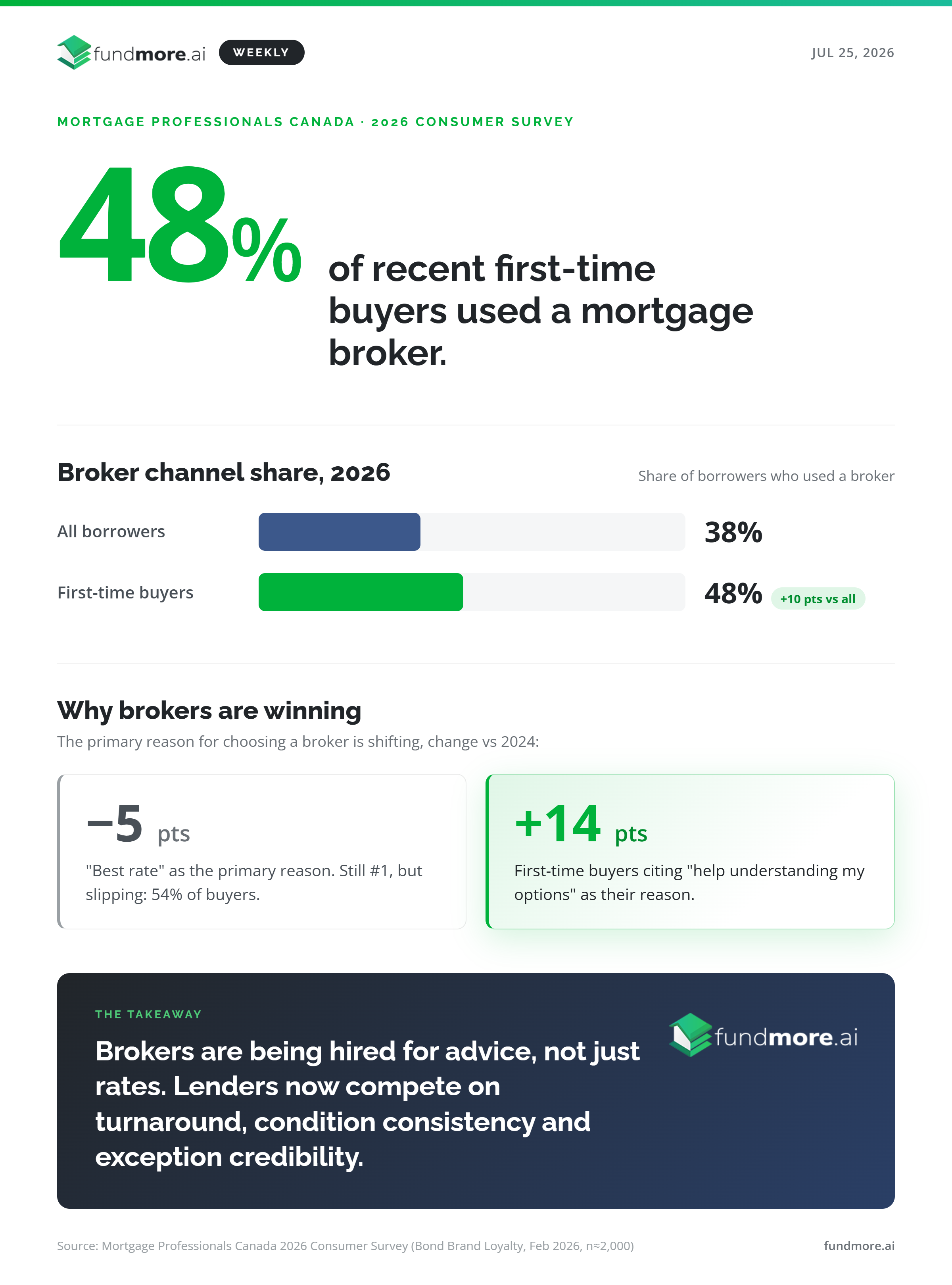
The rate era is quietly ending. The advice era is quietly beginning.
On July 24, Mortgage Professionals Canada released the 2026 Consumer Research Report, fielded by Bond Brand Loyalty across close to 2,000 Canadians in seven cities between February 5 and 25. The two headline numbers: broker channel share reached 38% overall, and 48% among recent first-time buyers. Those are not incremental moves; among first-time buyers, broker use is now within a rounding error of tied with the direct-to-lender channel that Canadian banks have owned for decades.