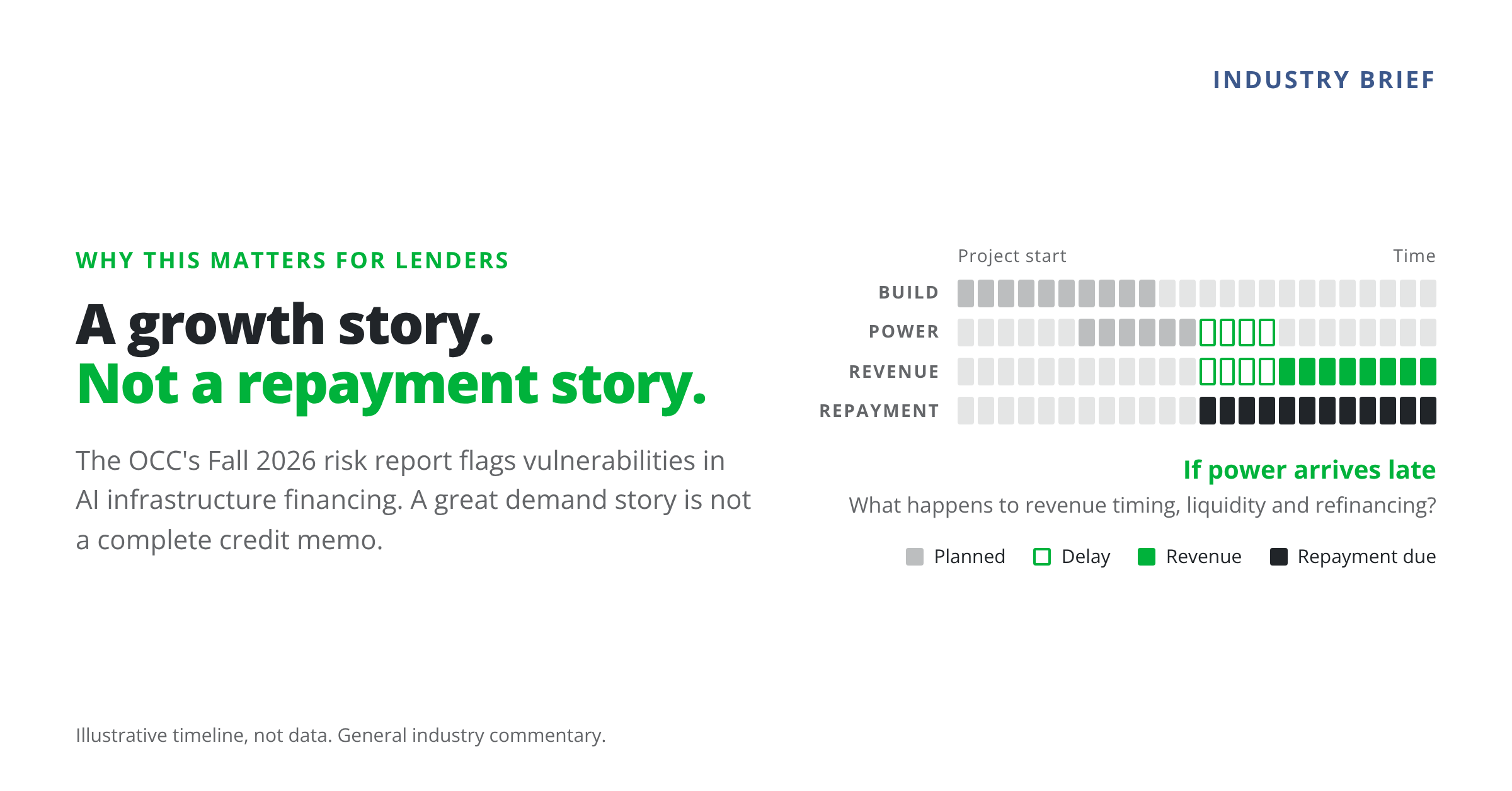
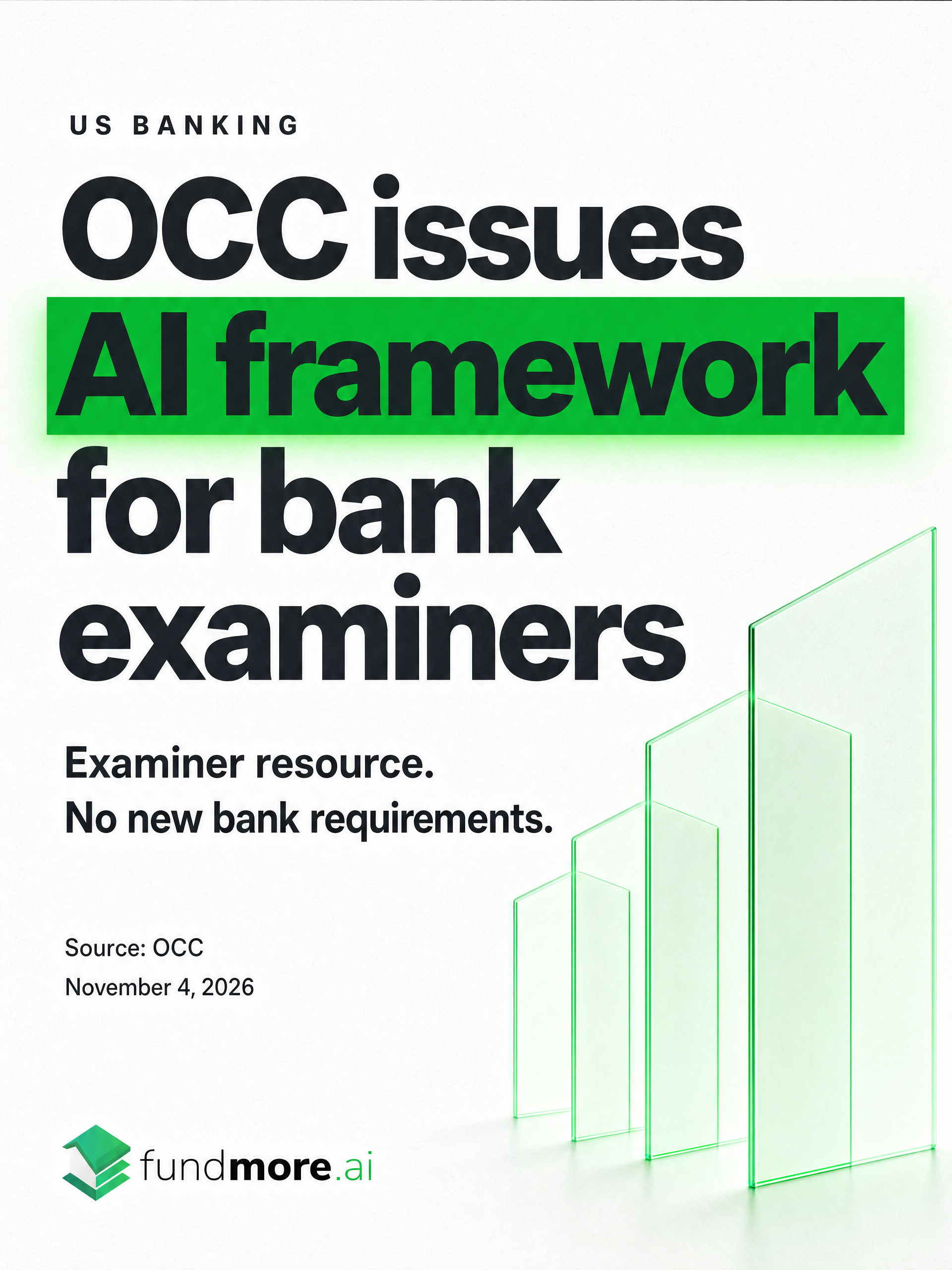
Before anyone turns the OCC's latest AI document into another mandatory implementation project, read the opening paragraphs. The distinction between an examiner resource and a new bank requirement is doing real work here.
The polite version of a supervisory letter
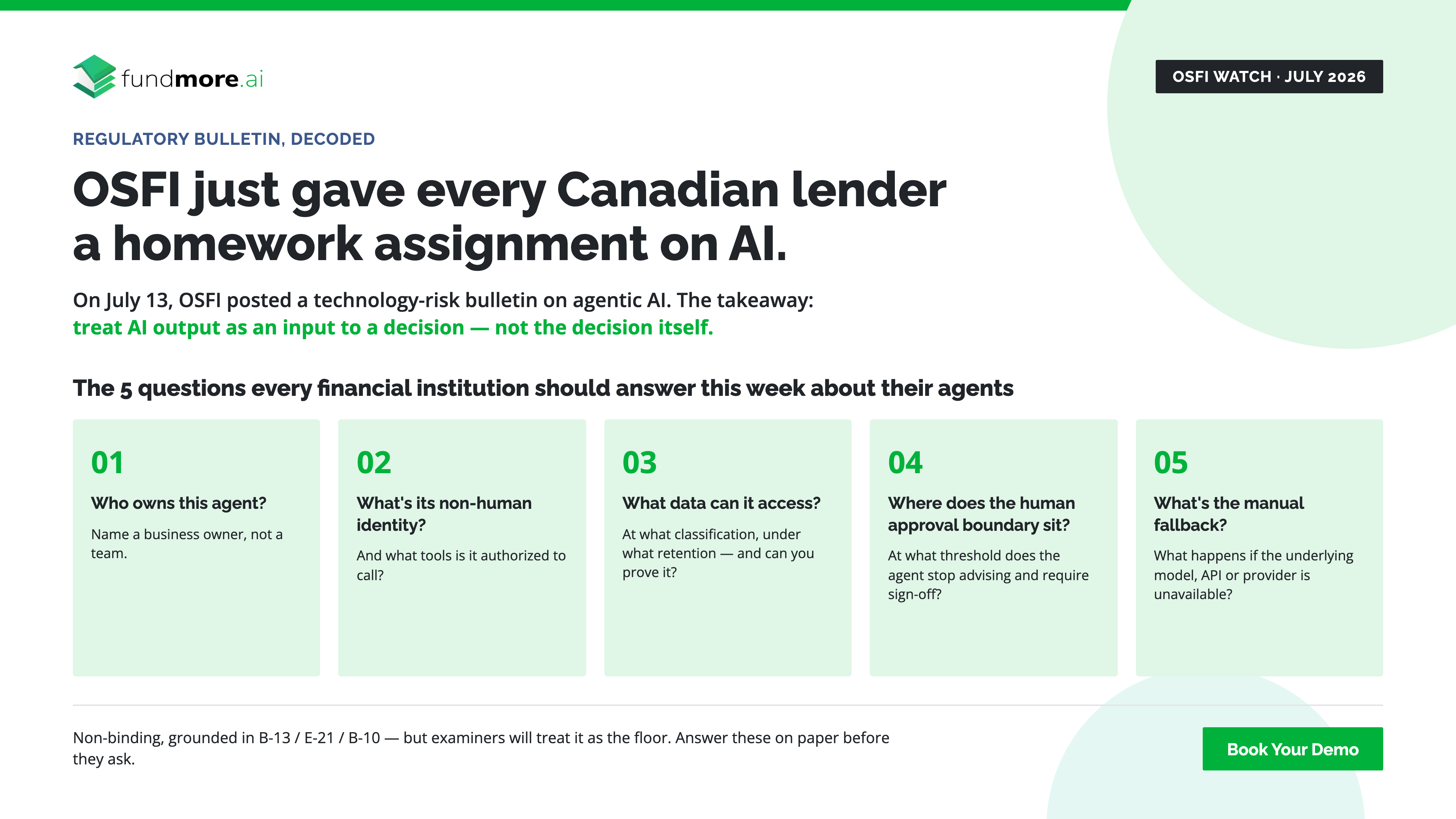
On July 13, OSFI posted a technology-risk bulletin titled Generative and Agentic Artificial Intelligence: Implications for Technology, Cyber Security, and Operational Resilience. The regulator's messaging positions it as "sound practices" grounded in the existing B-13, E-21, and B-10 guidelines, and technically, that framing is correct; no new legal duty came into force that day. Practically, the bulletin reads like the polite Canadian version of a supervisory letter: here are the questions we are going to start asking; here are the answers we would like to hear.
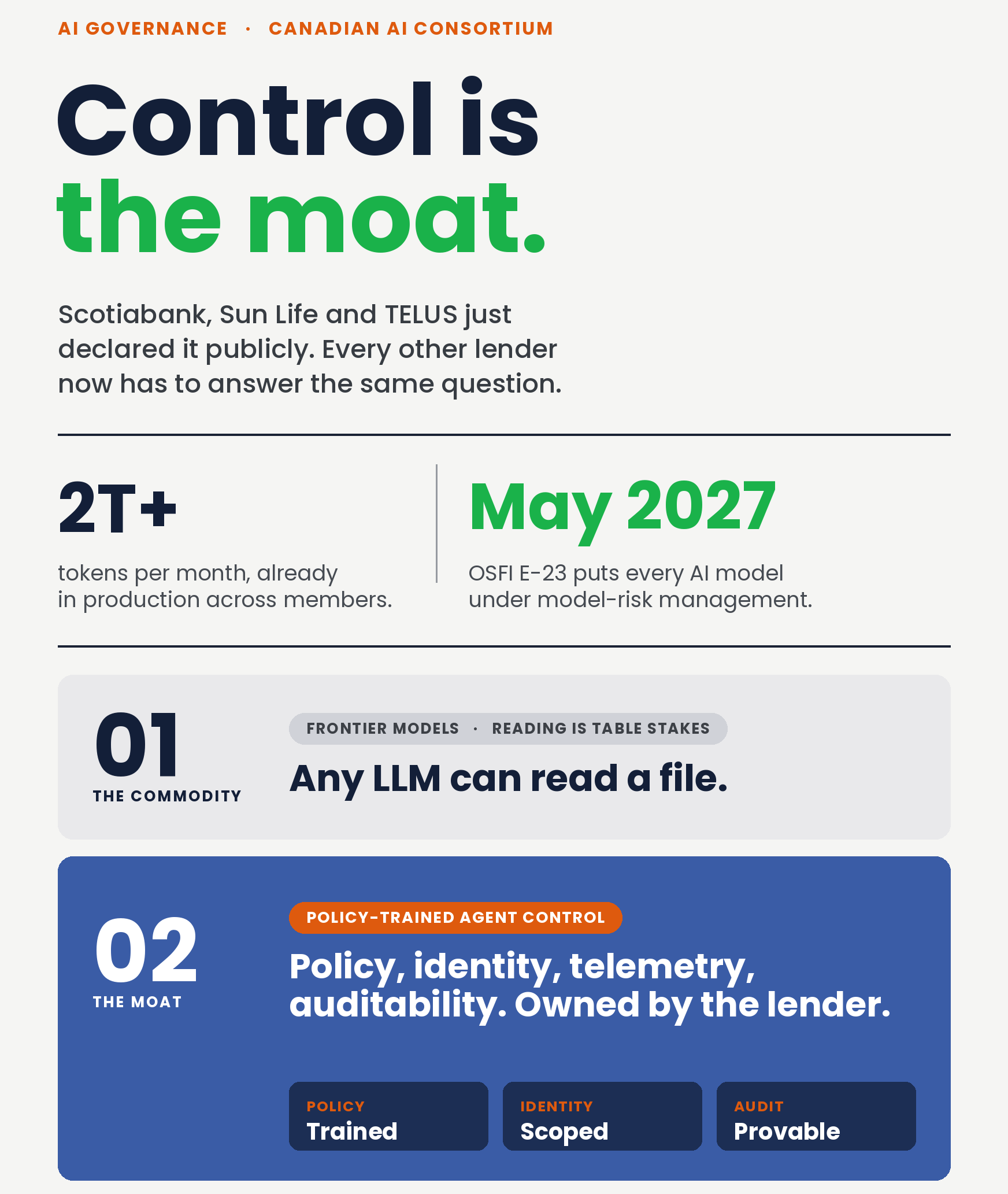
The moat moved. Most lenders have not noticed yet.
On July 7, Scotiabank, Sun Life and TELUS teamed up with Lightworks to launch the AI Consortium, a shared initiative to build and permanently own the enterprise AI control infrastructure that Canadian regulated institutions actually need. The flagship program is called the Agentic Control Plane; it is already running in production, processing more than 2 trillion tokens per month, and delivering regulatory-grade auditability across every model, agent, user and inference pipeline in scope.

The Bank of Canada just handed out hall passes to 300 fintech companies. And unlike the bureaucratic paper-pushing exercises we’ve become numb to, this one actually matters.